
Vessels / Power / Infrastructure
Electric Vessels Are Ready. Are the Ports?
Battery electric vessels are moving beyond pilots. But 2026 projects are exposing a different constraint: grid capacity, charging infrastructure and whether the shore can actually support the vessel.
In Brief
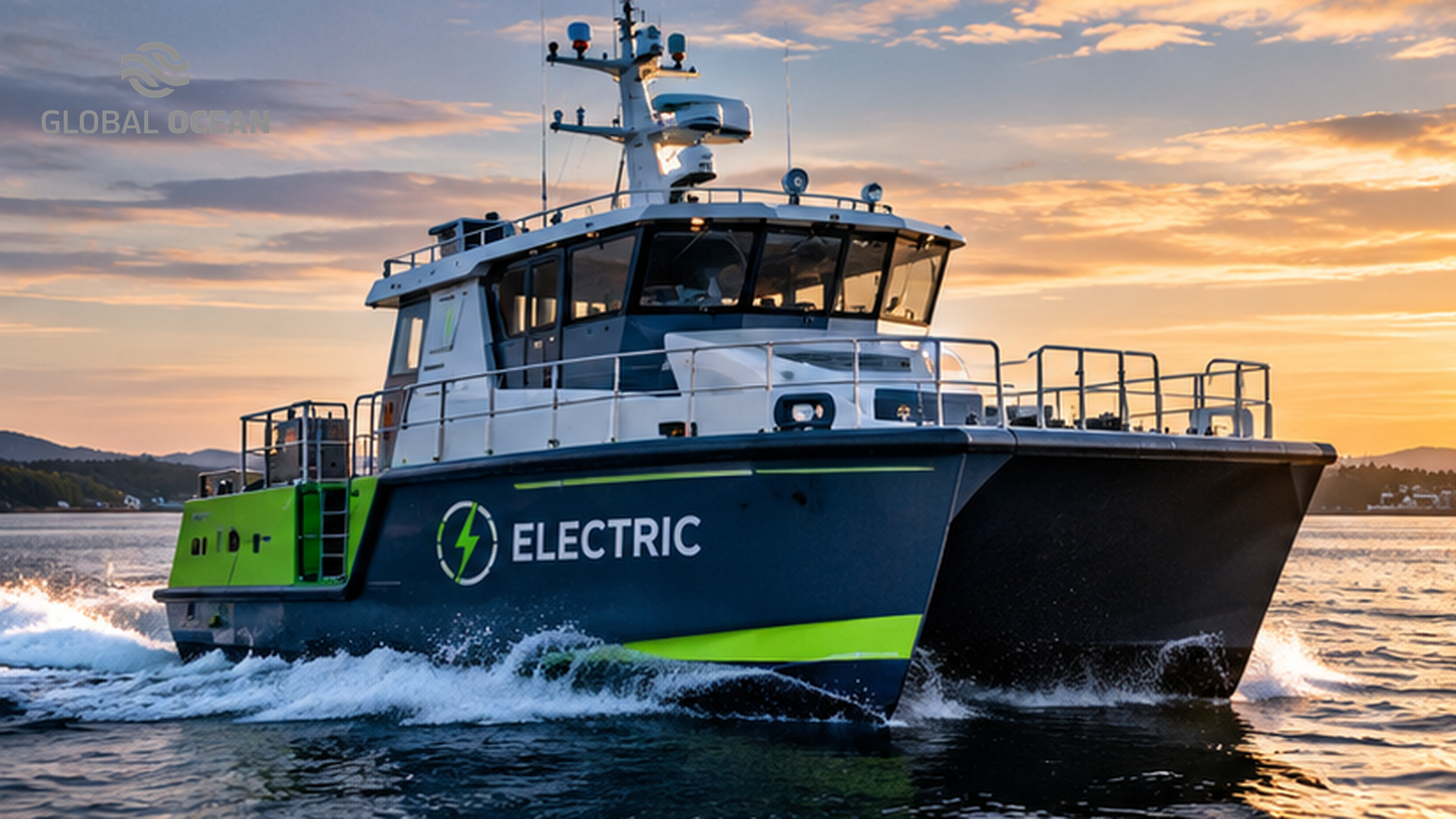
For short sea shipping, ferries, harbour craft and workboats, battery electric propulsion is no longer simply an experimental concept.
The International Chamber of Shipping reported in September 2026 that battery electric technology is already transforming short sea shipping, with electric ferries, tugboats and short haul cargo vessels operating worldwide.
A separate IMO supported study examined 67 ferries operating across 26 ports in Türkiye’s Sea of Marmara and found battery electric or hybrid propulsion technically feasible across every route assessed.
But the same study identified what may become one of the defining challenges of marine electrification:
The vessel can be ready before the port is.
- High voltage grid connections.
- Charging infrastructure.
- Available electrical capacity.
- Charging windows.
- Energy storage.
- Power management.
The next stage of marine electrification may depend as much on what happens at the berth as what happens in the engine room.
The Bottleneck Is Moving Ashore
Battery technology is improving.
Vessel integration is improving.
Electric propulsion has already proven particularly well suited to operations with predictable routes, regular charging opportunities and relatively short voyages.
But building an electric vessel solves only half the problem.
That vessel still needs energy.
And in commercial operations, it may need a very large amount of energy delivered during a relatively small window.
A ferry cannot simply remain tied to the berth for six hours because the electrical supply cannot charge it quickly enough.
A crew transfer vessel cannot miss its offshore operating window.
A harbour tug has to be available when the port needs it.
That makes charging capacity an operational requirement, not an accessory.
A Real World Example Is Already Exposing the Problem
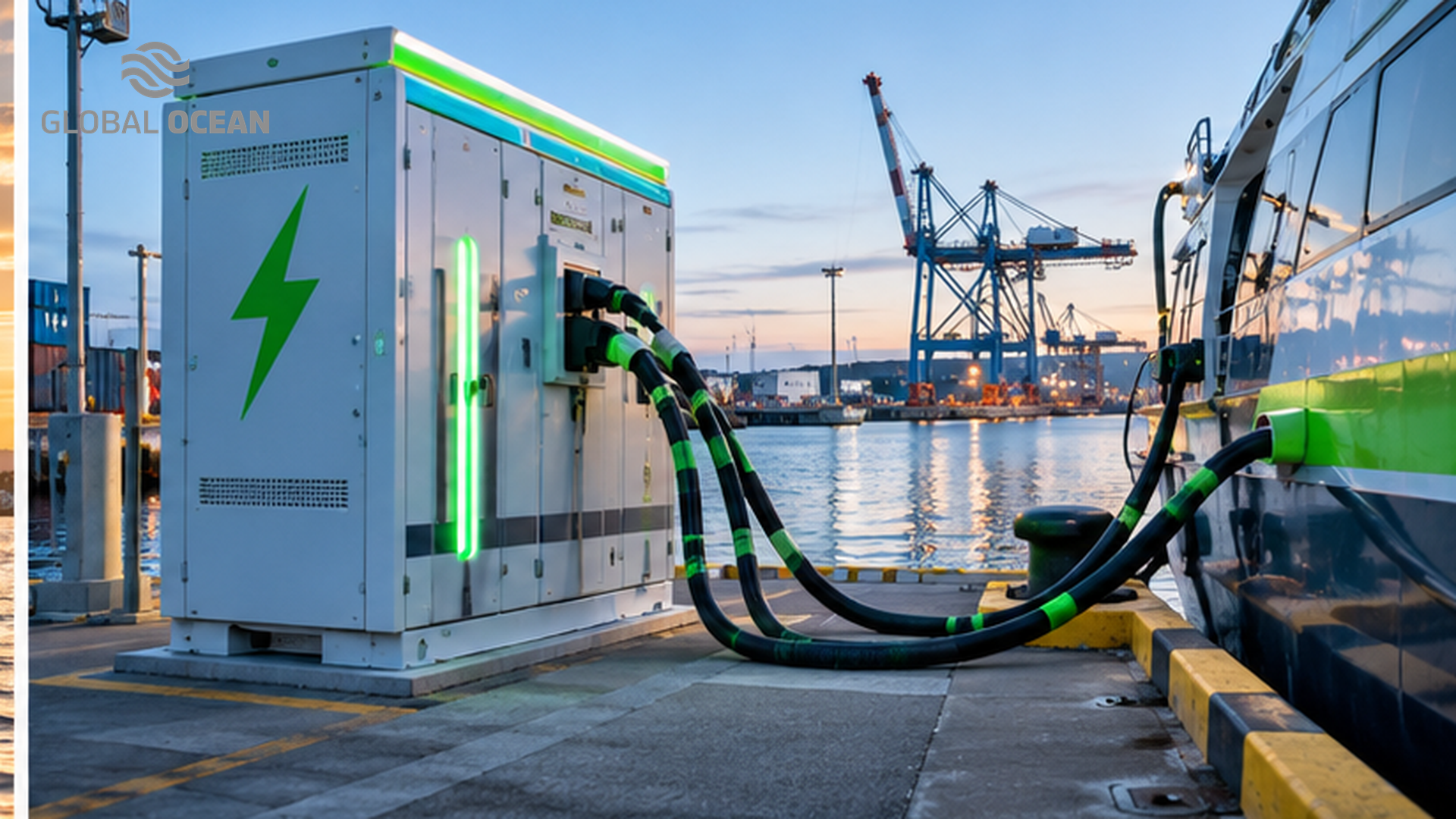
In 2026, UK operator Tidal Transit was commissioning e Ginny, an electric crew transfer vessel converted from diesel propulsion.
The vessel carries more than 3 MWh of marine batteries.
But getting energy into those batteries created another challenge.
Tidal Transit said existing shoreside grid infrastructure at its location did not have enough capacity to adequately support charging requirements.
The solution was unusual.
The company deployed a 450 kWh mobile battery energy storage system at the dock, capable of providing charging power of up to 240 kW.
Essentially, a large battery was brought to shore to charge the much larger battery inside the vessel.
It sounds counterintuitive.
But it demonstrates the problem perfectly.
Electric vessel technology can move faster than electrical infrastructure.
This Is Why Electrification Is a Systems Problem
Marine electrification is often discussed as though the diesel engine is simply removed and batteries are installed in its place.
The reality is more integrated.
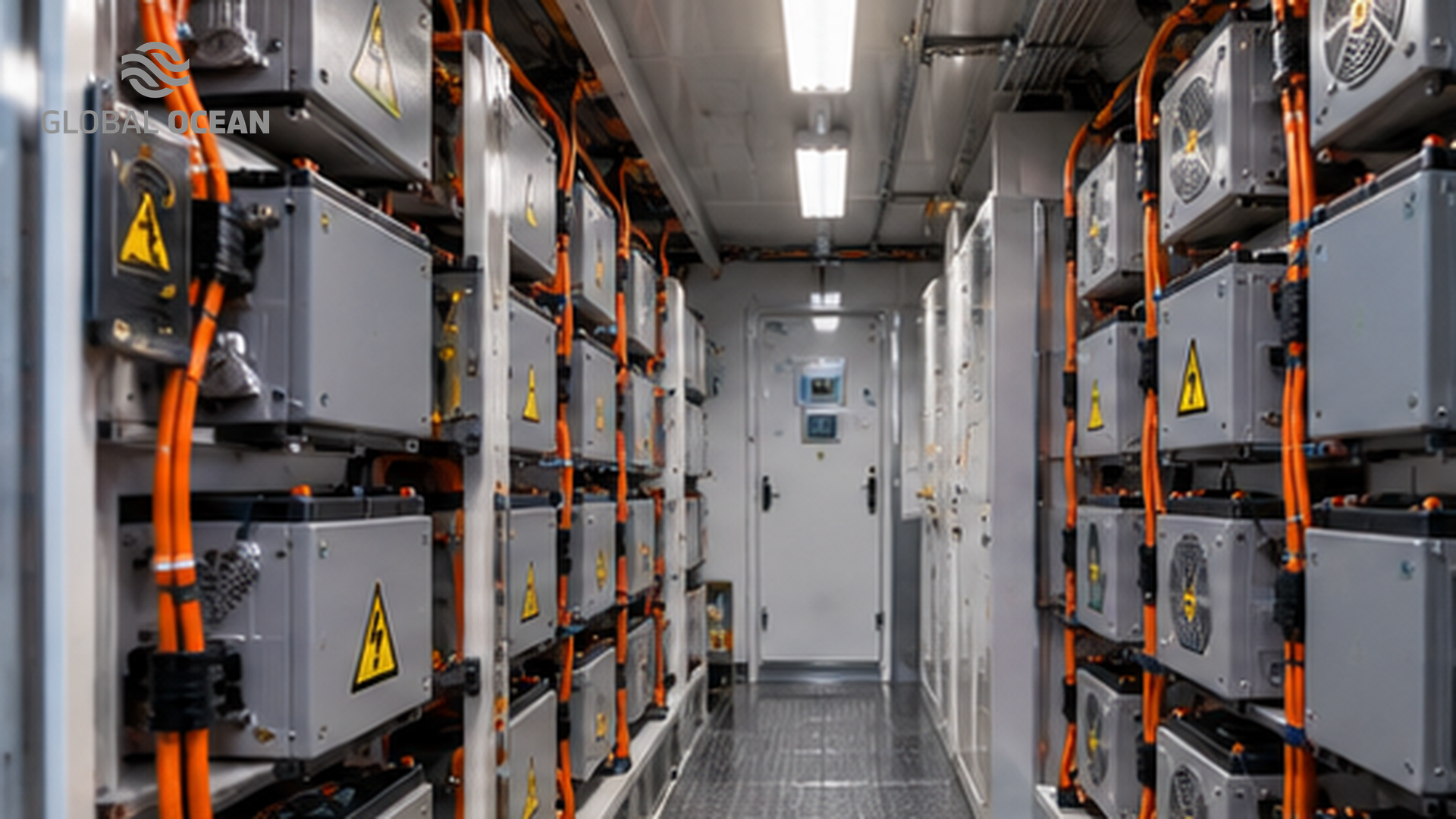
The vessel needs:
- Battery storage.
- Propulsion motors.
- Power electronics.
- Cooling.
- Fire protection.
- Energy management.
- Charging interfaces.
- Control systems.
- Redundancy.
The port needs:
- Grid capacity.
- Transformers.
- High voltage infrastructure.
- Charging equipment.
- Energy storage.
- Connection management.
- Operational planning.
And the operator needs to know whether the vessel can recharge within the actual commercial schedule.
That means electrification should not begin with the question:
How big should the battery be?
It should begin with:
How does energy move through the entire operation?
The Route Decides the Technology
This is also why electric propulsion makes enormous sense for some vessels and very little sense for others.
The International Chamber of Shipping identifies short and predictable routes with regular charging opportunities as the strongest current application for fully electric propulsion.
Deep sea vessels are different.
Weight, space and energy density requirements make batteries far more useful today as part of hybrid energy systems rather than as the sole source of propulsion for long ocean passages.
That distinction is important.
A ferry repeating the same route twenty times a day.
A harbour tug operating within a defined port.
A crew transfer vessel servicing offshore infrastructure.
A workboat returning to the same base every night.
These are energy problems that can potentially be designed around predictable charging.
A vessel crossing an ocean for weeks is not.
The mistake is treating electrification as one universal technology decision.
The operating profile decides whether it works.
Hybrid Is Not a Failure to Go Electric
There is also a tendency to treat hybrid propulsion as an intermediate step toward something better.
That misses some of its operational value.
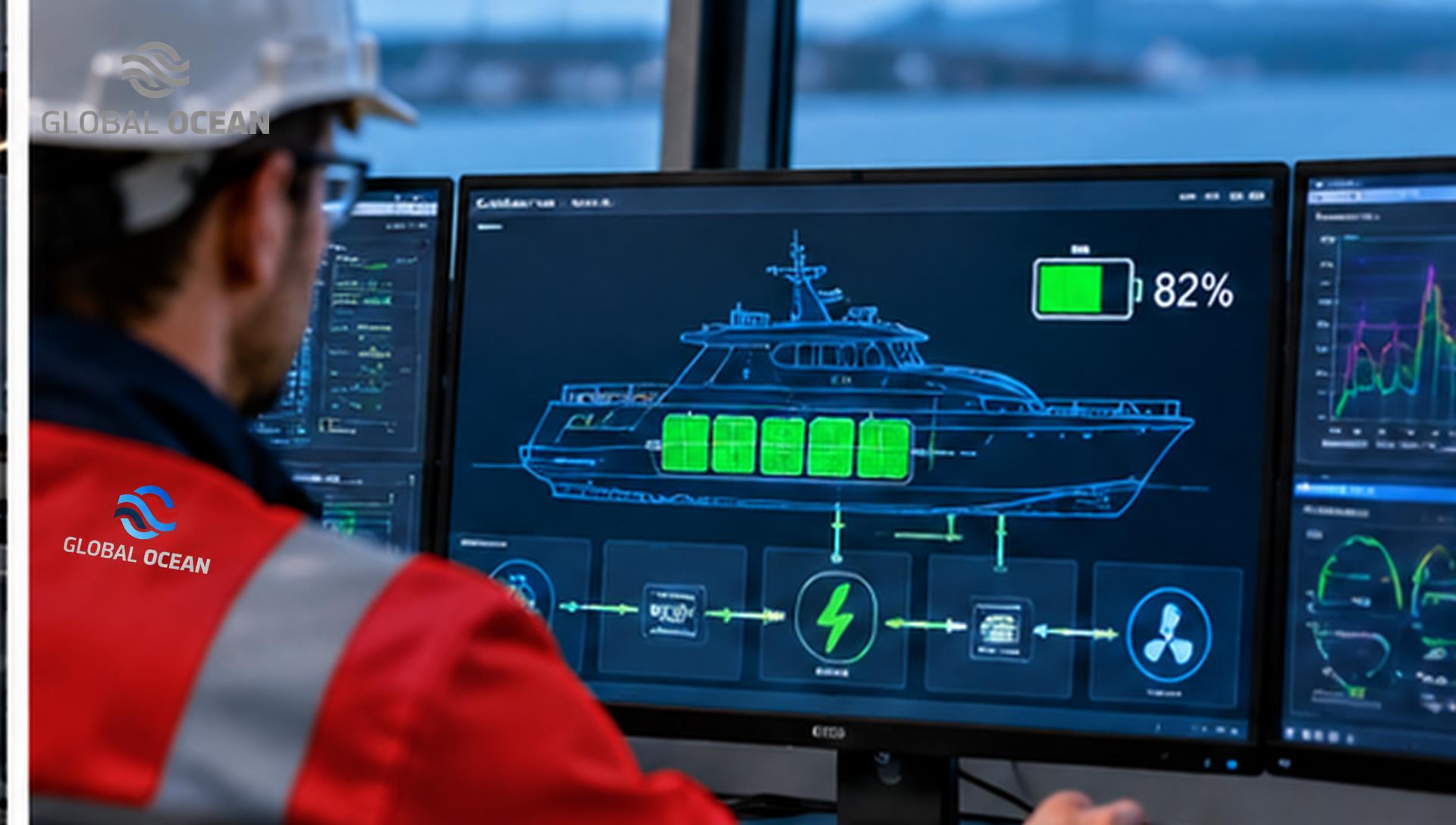
IMO’s GreenVoyage2050 programme notes that battery hybridization can allow engines to operate closer to efficient load ranges, provide additional power during peaks and enable battery operation during manoeuvring, standby or port activity.
For some vessels, that may be the stronger engineering decision.
Batteries can handle transient demand.
Engines can handle sustained energy requirements.
Shore power can reduce fuel use while alongside.
Power management systems can decide where energy is best coming from at any moment.
The point is not to maximize the amount of battery onboard.
The point is to build the most effective energy system for the operation.
Ports Are Becoming Part of Vessel Design
This may be the most important shift.
Historically, naval architects could design a vessel largely around what happened onboard.

Electrification increasingly extends the system beyond the hull.
Charging location affects battery sizing.
Grid capacity affects turnaround time.
Turnaround time affects vessel scheduling.
Charging power affects electrical architecture.
The availability of renewable electricity affects actual emissions performance.
And redundancy ashore may become just as important as redundancy onboard.
The 2026 IMO supported Sea of Marmara study explicitly recommended expansion of high voltage grid connections and shoreside charging infrastructure, alongside greater integration between transport and energy planning.
That is a significant change.
The port is becoming part of the propulsion system.
And the Rules Are Catching Up
As battery systems become more important onboard ships, regulators are also developing the safety framework around them.
In January 2026, IMO agreed a work programme covering new safety rules for lithium ion batteries and swappable battery containers on ships.
The roadmap includes work toward allowing batteries to serve as a ship’s main source of electrical power under SOLAS requirements.
Safety remains critical.
Marine battery installations have to account for risks including thermal runaway, fire, ventilation, isolation and emergency response.
As vessel electrification becomes more mainstream, these considerations will increasingly move from specialist projects into normal vessel design practice.
The Global Ocean View
The Vessel Is Only Half the System.
Marine electrification should not begin with a battery catalogue.
It should begin with the operation.
- How long is the route?
- How much power does the vessel actually require?
- How long is it alongside?
- How much charging capacity exists there?
- What happens if the grid connection is unavailable?
- Can energy storage ashore smooth peak demand?
- Does the vessel need full electric propulsion?
- Would hybrid deliver a better commercial outcome?
- What happens as the fleet grows?
Those questions need to be answered together.
Because there is little value in designing an extraordinary electric vessel that cannot be charged within the operating schedule.
And there is little value in building expensive charging infrastructure without understanding the vessels that will depend on it.
Electrification is not a vessel project.
It is an energy system project.
The strongest solutions will connect vessel design, onboard power, shore infrastructure and real operating requirements from the beginning.
What We’re Watching
Port Grid Capacity
Can electrical infrastructure expand quickly enough to support growing commercial electric fleets?
Mobile Energy Storage
Will containerised battery systems become a common bridge where permanent grid upgrades lag vessel deployment?
Electric Workboats
Harbour craft, tugs and crew transfer vessels may become some of the most important real world proving grounds for full electrification.
Hybrid Architecture
Will batteries increasingly become standard components of vessel power systems even where full electric propulsion is impractical?
Charging Standards
Greater standardisation could become essential as more ports serve vessels from multiple operators and manufacturers.
Fleet Scale
One electric vessel can often be accommodated.
The harder question is what happens when ten arrive at the berth.
The Bottom Line
Marine electrification has crossed an important threshold.
For the right operating profiles, the question is increasingly no longer whether battery electric vessels can work.
They can.
The harder question is whether the surrounding infrastructure can support them commercially.
The next generation of electric marine operations will have to solve both sides of the equation.
The vessel.
And everything required to keep it moving.
Sources referenced in the supplied article. Regulatory information reflects the supplied copy.