
Aquaculture / Engineering / Infrastructure
The $51M Closed Containment Test: What the Marine Donut Could Change for Aquaculture
A major Canadian project is bringing one of the world’s most closely watched floating closed containment systems to British Columbia. The real story is bigger than one technology. It is what happens when fish farming becomes an increasingly engineered operating environment.
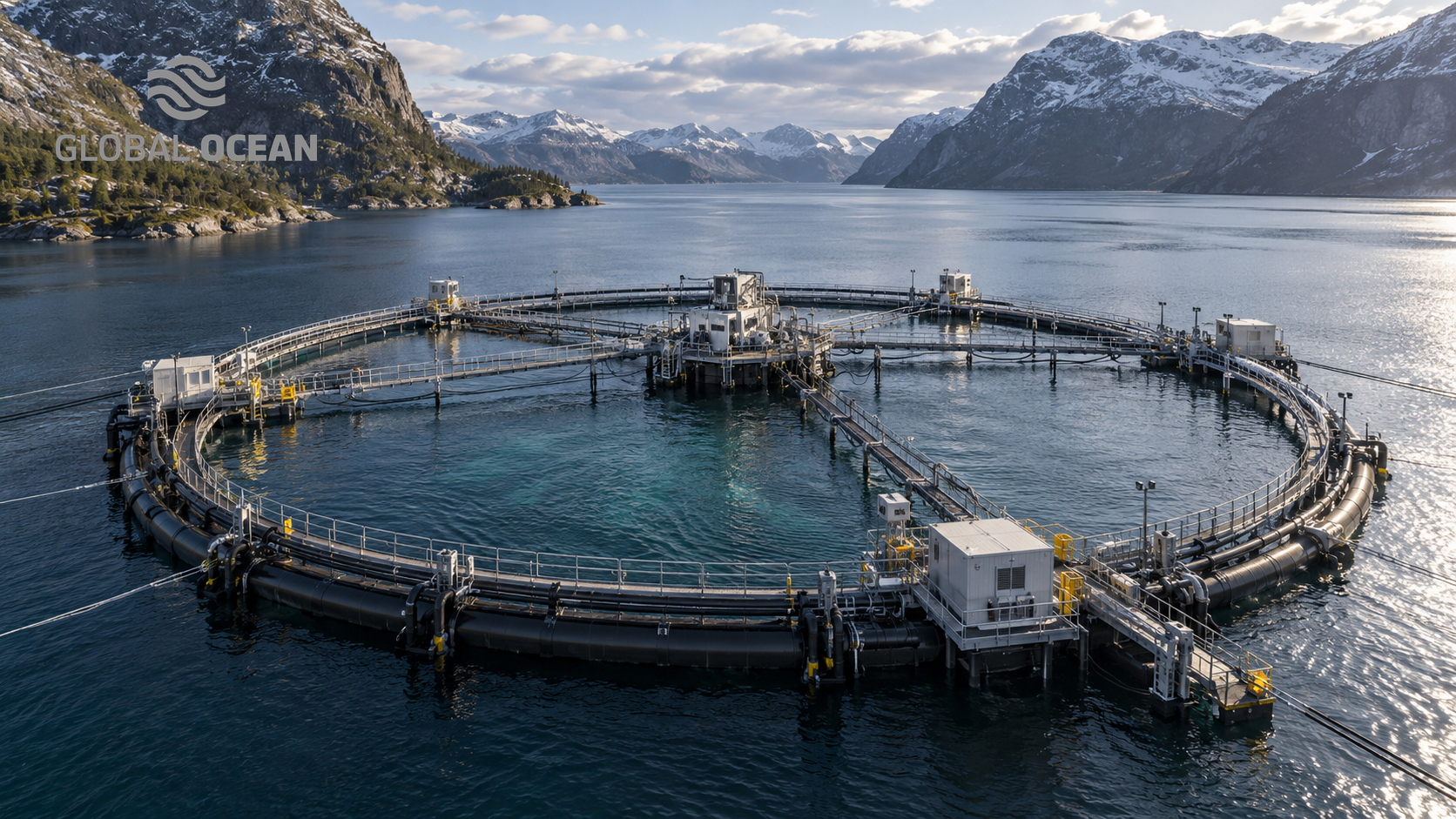
In Brief
Canada’s Ocean Supercluster has announced a C$51 million project to adapt and commercialize Bluegreen’s Marine Donut for Pacific conditions in British Columbia.
The distinction matters: this is a C$51 million total project, not a C$51 million government grant. Canada’s Ocean Supercluster is contributing C$14.5 million, with the balance coming from project partners. The project is the largest announced by the Supercluster to date.
The Marine Donut is a floating closed containment system developed in Norway. Bluegreen says the technology has already completed two full production cycles with SalMar and produced close to 2,000 tonnes of salmon.
But the important question is not whether one unusual looking structure works.
It is whether floating closed containment can become a repeatable, scalable operating model.
Because if it can, the infrastructure required to farm fish at sea begins to change dramatically.
Why This Matters Now
Closed containment aquaculture has existed as an idea for years.
What is changing is the level of money, regulation and industrial capacity now moving behind it.
The Canadian project will establish manufacturing capability in Campbell River, adapt six technologies for Pacific conditions and begin building a North American supply base rather than simply importing finished systems from Norway.
That makes this more than another pilot.
It is an attempt to move from:
technology demonstration
to
industrialized production infrastructure.
And that transition is much harder.
A prototype has to work.
A commercial system has to work repeatedly, economically and predictably in the hands of operators.
What Has Actually Been Proven?
This is where the story becomes interesting.
The first Marine Donut has already gone through full scale production testing with Norwegian salmon producer SalMar.
According to Bluegreen and project reporting, two production cycles have produced close to 2,000 tonnes of fish in total. The second full scale cycle concluded with nearly 1,000 tonnes of salmon harvested in approximately 12 hours.
More importantly, there is now operational data.
SalMar’s final monitoring report for the second production cycle tracked oxygen, temperature, salinity, pH, turbidity, CO₂ and other water quality parameters.
Bluegreen’s summary of that report states that average oxygen saturation was 91.5%, growth remained consistent with SalMar’s models and the economic feed conversion ratio was 1.20.
The testing also exposed areas requiring improvement.
The final report identified challenges with dead fish transport and removal, and Bluegreen has publicly acknowledged structural issues discovered in the first generation design related to long term loading, temperature effects and thermoplastic stiffness.
Those findings informed the redesigned Marine Donut 2.0.
That may be one of the most important parts of the story.
Real innovation is not a perfect pilot.
It is a system that produces data, exposes weaknesses, gets redesigned and becomes more reliable.
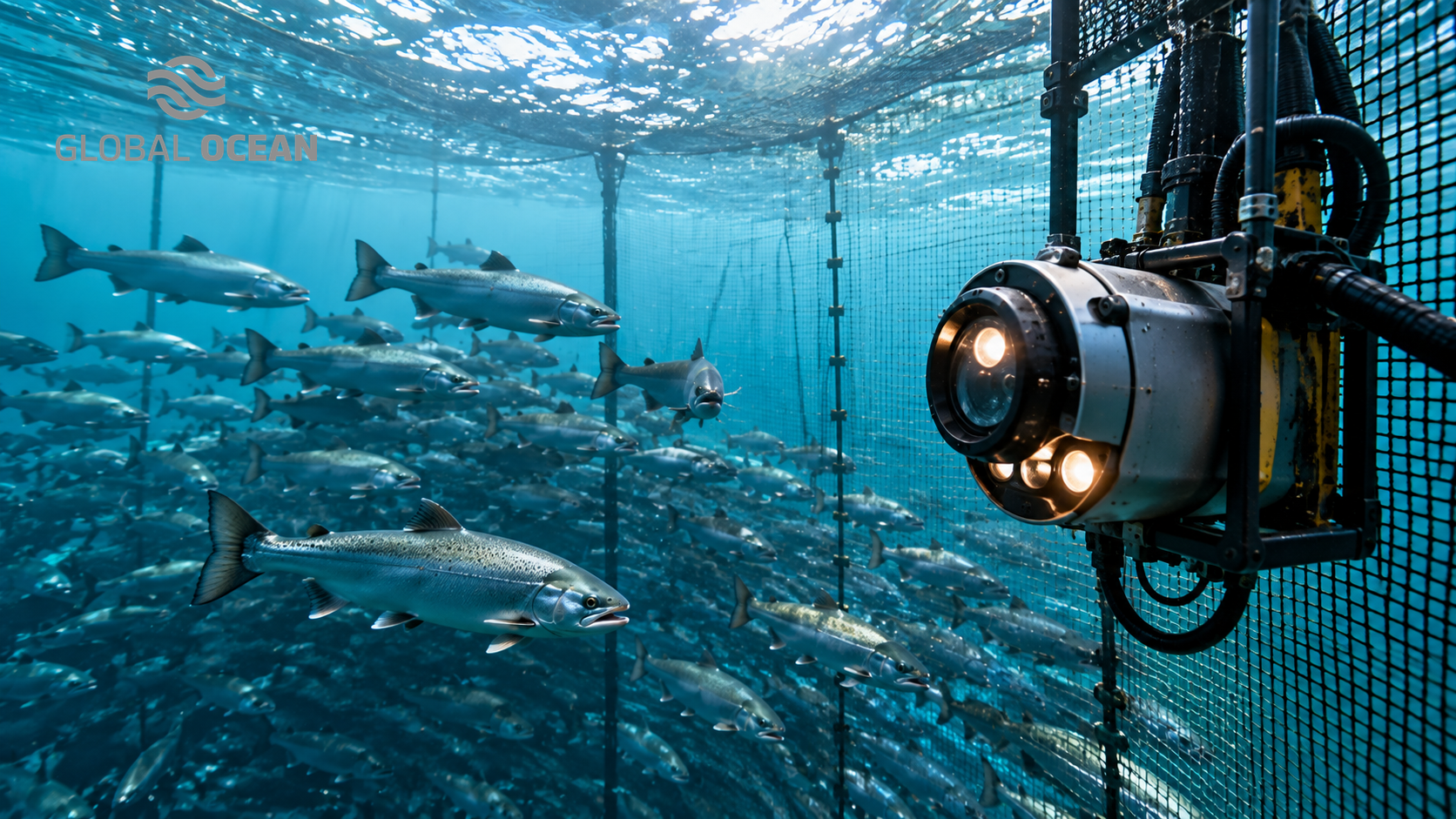
Closed Containment Changes the Engineering Problem
An open net pen relies heavily on the surrounding marine environment.
A closed or semi closed production environment moves more responsibility inside the system.
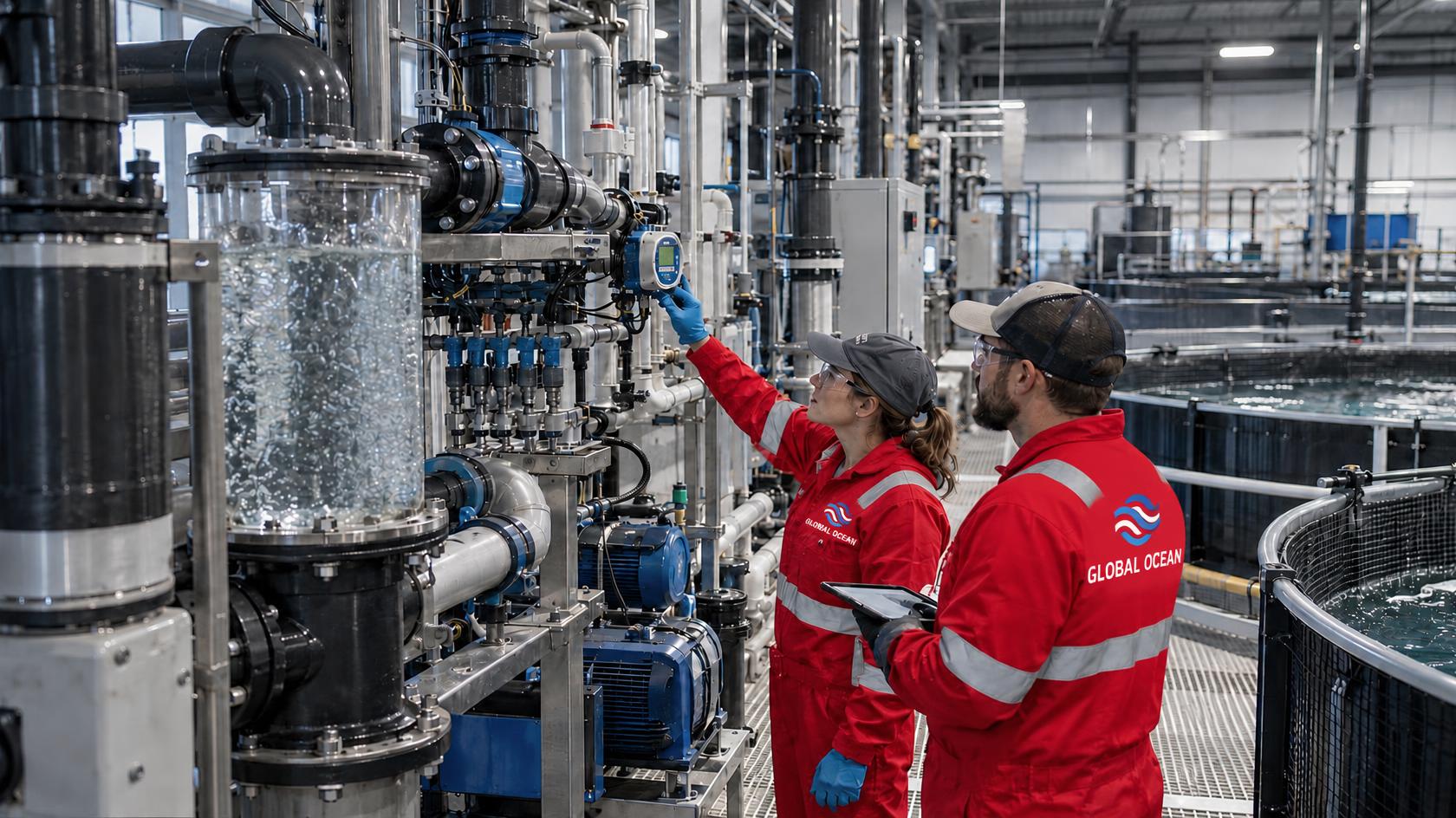
Water movement must be managed.
Oxygen must be monitored and controlled.
Waste has to go somewhere.
Pumping matters.
Power matters.
Backup systems matter.
Sensors matter.
Automation matters.
Fish welfare increasingly depends on the performance of the infrastructure surrounding the fish.
Research into emerging salmon production systems has found that closed and semi closed systems can reduce some challenges associated with conventional production, while introducing new issues around water quality, energy consumption, fish welfare and system operation.
This is the shift the industry should be paying attention to. Aquaculture starts looking less like a cage and more like a complete marine system.
What Closed Containment Is Trying to Solve
The attraction is straightforward.
A physical barrier between farmed fish and the surrounding environment can create greater control over several persistent aquaculture challenges.
The Marine Donut draws intake water from deeper below the surface, where exposure to sea lice can be reduced. The system is also designed around escape prevention and collection of sludge and feed waste.
According to Bluegreen’s published results from its first generation system, no escapes were recorded and the fish did not require delousing during the test program. Those are company reported results and should be viewed in that context, but they demonstrate why the technology is attracting interest.
The commercial proposition is powerful:
More environmental control.
Lower biological exposure.
Better waste management.
Potentially more predictable production.
But greater control comes with greater responsibility.
Control Has a Cost
Closing the production environment does not eliminate risk.
It changes where the risk sits.
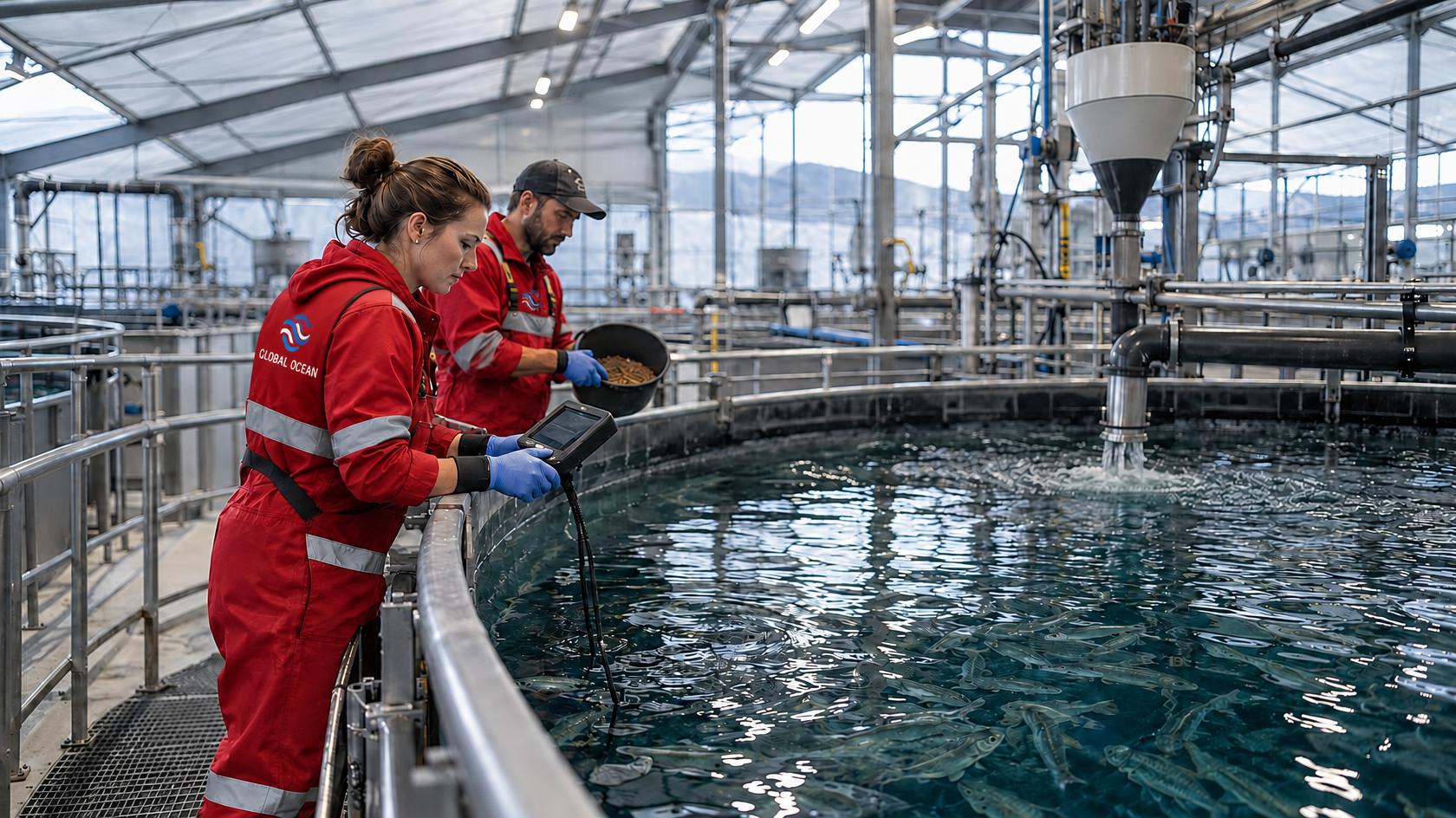
Instead of relying as heavily on natural water movement, operators may become more dependent on engineered systems.
Pumps.
Oxygen.
Power.
Filtration.
Monitoring.
Control systems.
Emergency redundancy.
Maintenance.
A failure in one part of an integrated system can quickly become an operational problem somewhere else.
That means closed containment should not be evaluated simply by asking:
Does the structure work?
The better question is: Can the entire operation remain reliable at commercial scale? That includes biology, engineering, energy, serviceability, labour, maintenance and economics.
British Columbia Makes This More Than a Technology Story
There is another reason this C$51 million project matters.
British Columbia is becoming one of the most important real world tests of closed containment aquaculture policy.
The Government of Canada’s current policy calls for open net pen salmon aquaculture in B.C. coastal waters to end by June 30, 2029. Since July 2024, new salmon aquaculture licences in coastal B.C. are to be considered only for marine or land based closed containment systems.
The government has also acknowledged that closed containment systems are likely to require greater investment and has proposed longer licence periods for successful closed containment applicants.
That creates a very unusual market.
Technology development is not occurring in isolation.
Regulation, investment and industry economics are converging at the same time.
Whether that ultimately produces a scalable model remains to be proven.
But B.C. is about to generate some extremely valuable answers.
The Bigger Opportunity May Be the Ecosystem Around the Farm
One of the most interesting parts of the Marine Donut announcement has little to do with its shape.
Bluegreen intends to establish manufacturing capacity in Campbell River rather than manufacture every system in Norway and ship it across the Atlantic.
The project also includes workforce development.
Working with North Island College, the initiative plans to train up to 140 students in thermoplastic manufacturing, including recruitment from local First Nations, as well as training operators specifically for Marine Donut systems.
That signals something bigger.
If closed containment grows, the opportunity is not limited to the company producing the containment structure.
It creates demand across an entire marine supply chain:
- oxygen systems
- pumps
- piping
- filtration
- electrical systems
- generators
- sensors
- automation
- cameras
- feed systems
- sludge handling
- mooring
- service vessels
- maintenance
- asset management
- commissioning
- trained operators
That is how a new production model becomes an industry.
The Global Ocean View
The Future Farm Will Be a Systems Integration Project
The most important development here may not be the Marine Donut itself.
It is the direction of travel.
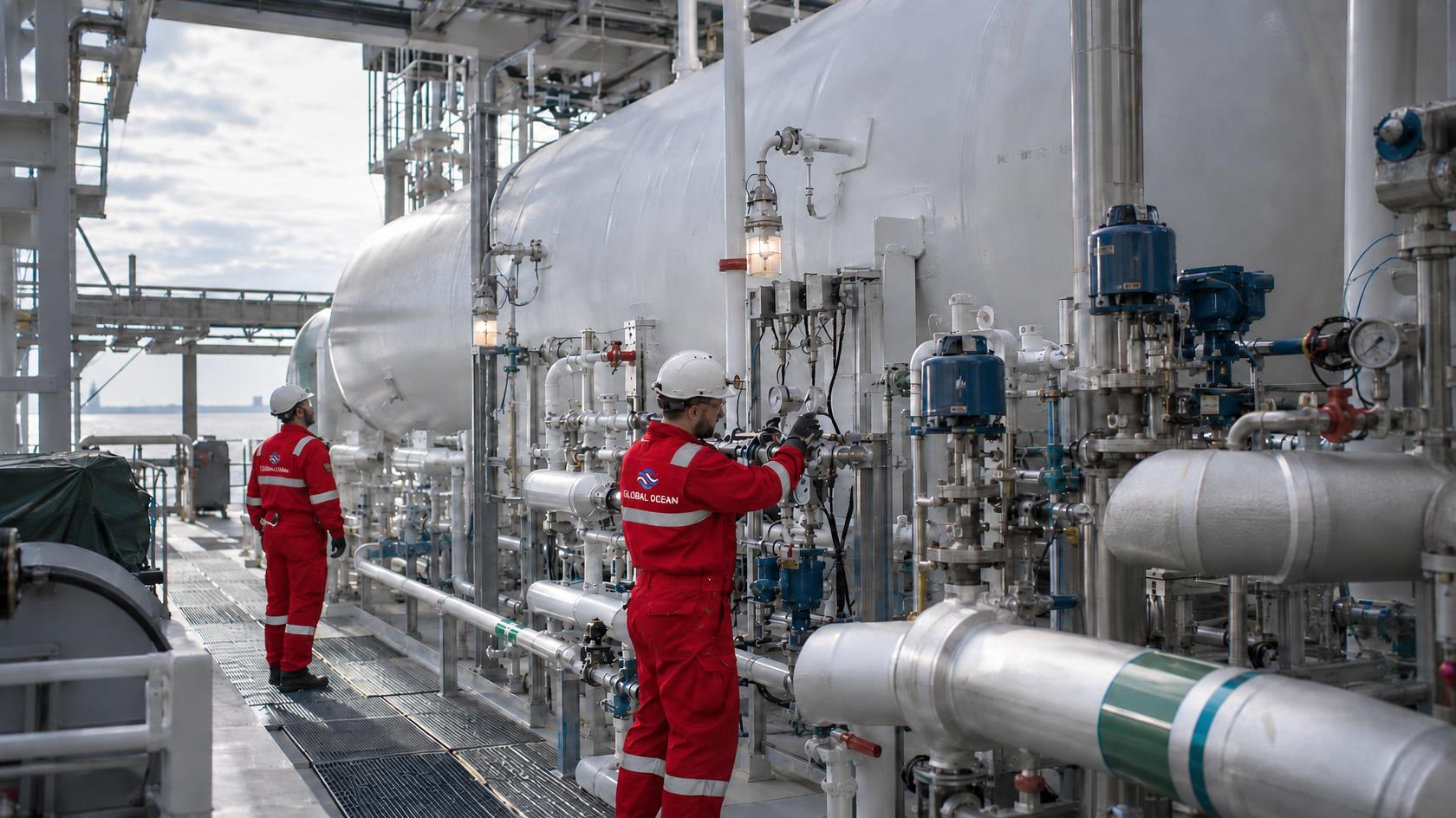
As aquaculture becomes more controlled, more monitored and more engineered, individual pieces of equipment matter less than how well the entire operation works together.
The pen cannot be designed independently of oxygen.
Oxygen cannot be separated from biomass and water quality.
Pumping cannot be separated from power.
Power cannot be separated from redundancy.
Waste handling cannot be separated from environmental performance.
And none of it can be separated from the people who have to operate and maintain the farm every day.
That changes what good aquaculture engineering looks like.
The objective is not to assemble the most advanced components.
It is to build an operation where every component performs as part of one system. More control means more engineering. And more engineering means integration, redundancy and lifecycle support become more important, not less.
What We’re Watching
The next phase will tell the industry far more than the announcement itself.
We will be watching:
Pacific adaptation
How does a Norwegian system perform when redesigned for B.C.’s sites, environmental loads and operating conditions?
Industrialization
Can Marine Donut 2.0 be manufactured repeatedly, efficiently and consistently?
Production economics
Can improved biological control offset additional infrastructure, energy and maintenance requirements?
Operational reliability
How much redundancy and technical support will commercial scale farms require?
Regulation
How will Canada ultimately define and regulate marine closed containment as the 2029 transition approaches?
Scalability
Can closed containment move from individual installations to a commercially repeatable production model?
Those answers will matter far beyond British Columbia.
The Bottom Line
The C$51 million Marine Donut project should not be judged simply as a bet on one piece of aquaculture technology.
It is a test of something much larger.
Can the industry move more of the production environment under engineered control without making the economics or operation unmanageable?
If the answer is yes, aquaculture infrastructure changes.
Farms become more integrated.
Engineering becomes more important.
Monitoring becomes more important.
Oxygen, water, power and redundancy become core production systems.
And the companies capable of making those systems work together will become increasingly valuable.
The future of aquaculture may not simply be more contained.
It may be more engineered.
Sources referenced in the supplied article. Regulatory information reflects the supplied copy.